

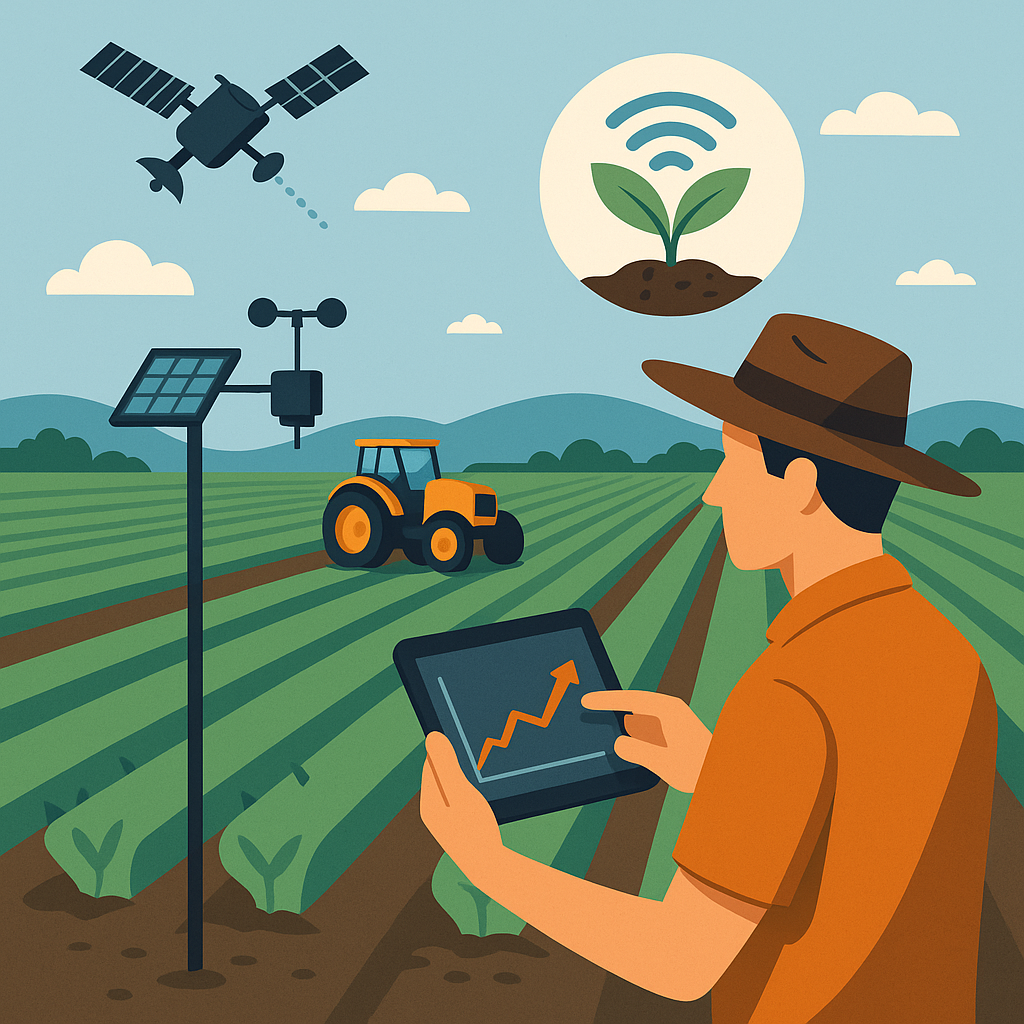
Agriculture is one of the most surprising cases in digital transformation.
For decades, the agricultural sector has been viewed as an eminently manual sector, dependent on intuition, experience, and the seasons. However, today it is one of the scenarios where artificial intelligence (AI) is showing the greatest impact.
The technological revolution is no longer limited to cities or laboratories: it is also germinating in crops, optimizing production, and promoting a more sustainable agriculture model.
From Manual to Intelligent
Agriculture has always been synonymous with physical effort and knowledge passed down through generations. That experience remains key, but it can now be complemented with data and algorithms that enhance decision-making.
AI in agriculture is changing the paradigm:
- Pest and disease prediction: algorithms analyze weather and historical patterns to anticipate risks and act before the problem escalates.
- Real-time monitoring: drones, sensors, and satellites allow for knowing the condition of crops with millimetric precision.
- Resource optimization: intelligent systems recommend the exact use of water and fertilizers, reducing waste and costs.
This does not mean displacing the farmer. On the contrary, it means giving them tools to be more efficient, competitive, and resilient.
Impact That Transcends Borders
The benefits of the “smart field” go far beyond productivity.
- Efficiency: fewer resources used to achieve better results.
- Sustainability: reduction in environmental impact thanks to the responsible use of inputs.
- Food security: more stable and predictable crops in a world where demand is constantly growing.
In a global context marked by climate change and pressure on production systems, AI in agriculture is not a luxury; it is a necessity.
Technology + Human Experience
A fundamental point: AI does not replace the farmer’s experience. It complements it. Intuition, tradition, and local knowledge remain irreplaceable, but by integrating with artificial intelligence, they become a driver of innovation and competitiveness.
The best practices are emerging when farmers, engineers, and technologists work together, creating solutions adapted to the realities of the field.
The Future of Agriculture is Collaborative
The smart field is not science fiction. It is already happening in various regions of the world and shows immense potential for Latin America, where agriculture is an economic and cultural engine.
The question is not whether agriculture will adopt AI, but how quickly it will do so and how each country, company, or community will prepare to integrate it with purpose.
At Adverweb Consulting we believe that the future of agriculture lies in the collaboration between tradition and technology. Artificial intelligence does not come to replace work in the field: it comes to enhance it, make it more efficient, and sustainable.
The challenge is to dare to take the step.
What do you think?
Is your organization exploring the potential of the “smart field”?
#ArtificialIntelligence #DigitalTransformation #Agrotech #Sustainability #Adverweb #SmartFarming